Wen
Giwa-Osagie
Principal Product Leader · AI Systems & 0→1 Product Development
I build and ship production AI systems and 0→1 software products—turning complex business problems into scalable platforms, automated workflows, and measurable outcomes.
Building an Evidence-Grounded Personalization Engine
Multi-Agent Workflow Design · Structured Data · Fit Scoring · Human-in-the-Loop Quality Control
High-value business workflows often require the same difficult combination: interpreting an unstructured request, identifying the most relevant proof points, creating a tailored response, and maintaining accuracy at volume.
Generic AI tools can create fluent output, but they can also distort facts, dilute professional voice, or introduce unsupported claims. The product challenge was not simply generating documents faster. It was building a reliable system that could personalize output while remaining grounded in verified source data.
I designed and built a grounded AI personalization engine: a multi-agent workflow orchestrated in n8n. The system uses a structured accomplishment and evidence database as its source of truth, then evaluates incoming opportunities against that data before producing tailored, review-ready materials.
The system was first proven in a career-application use case, where accuracy, relevance, and scale matter. The underlying architecture is designed as a reusable pattern for any workflow that requires evidence-based personalization.
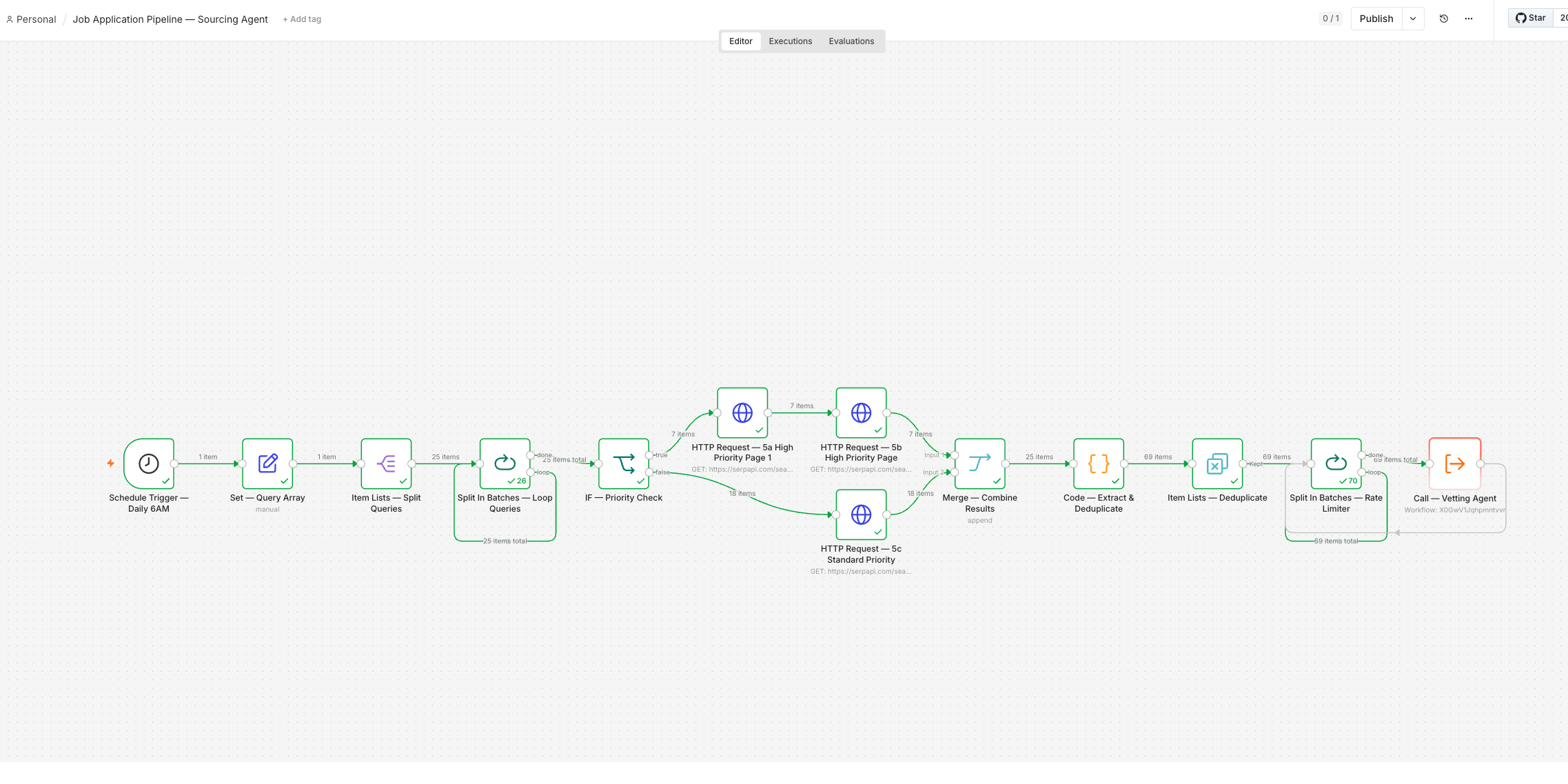
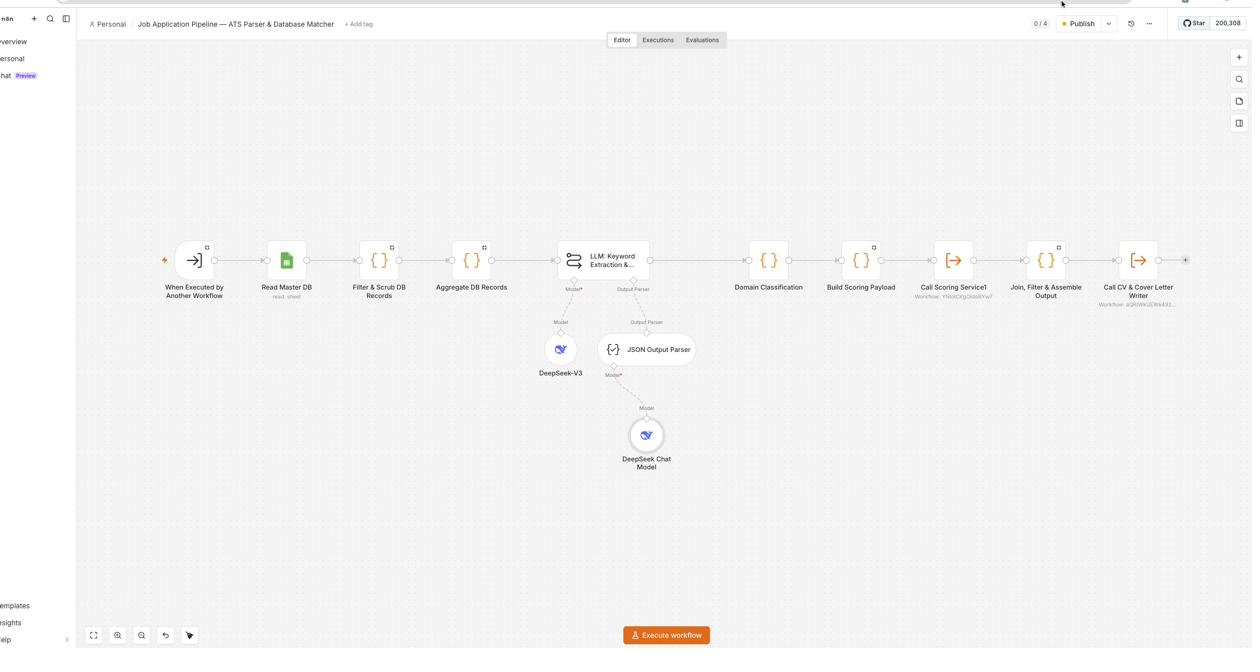
The system is designed to accelerate research, extraction, matching, drafting, and quality checks—not to replace judgment. A human reviewer retains final authority over the opportunity, the output, and the decision to deploy it.
Verified by an independent user in a career-application use case, the system supported approximately 70 highly tailored applications per day and contributed to securing a role within three days. This is directional early validation—not a guaranteed outcome—but it demonstrated that structured source data, fit scoring, and human-reviewed AI personalization can increase speed without sacrificing relevance.
- Sales proposals and account-specific outreach
- RFP and security-questionnaire responses
- Client onboarding and documentation workflows
- Recruiting and talent-matching systems
- Customer-success communications
- Mortgage, fintech, and other regulated-document workflows
Building a 0→1 Multi-Tenant Mortgage SaaS Platform
0→1 Product Development · Mortgage SaaS · Multi-Tenant Architecture · AI-Assisted Development · Full-Stack Product Ownership
A mortgage-industry contact approached me to build an online borrower application that mortgage brokers could place on their websites. Rather than immediately building the requested application, I asked why they needed it.
I discovered that many mortgage brokers use application links provided by wholesale lenders directly on their websites. If a borrower's scenario doesn't fit that lender's programs, the loan is denied—even though another lender may have a program that fits. The broker loses the loan, the borrower is left unhappy, and revenue is lost on a loan that may have been approved elsewhere.
I reframed the opportunity around giving brokers control of their own loan application process—allowing them to shop the mortgage package with the wholesale lender that is the best fit, leading to more approvals, more closed loans, higher revenue, and happier borrowers.
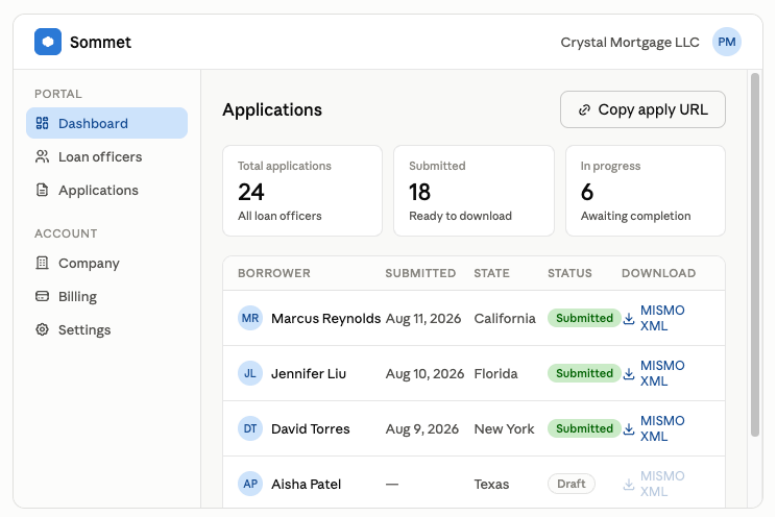
- An online borrower application
- A broker dashboard to manage loan applications
- The ability for borrowers to save an incomplete application and return later
- Automated reminders for incomplete applications
- MISMO XML generation after submission
- The ability for brokers to download the MISMO file and upload it into their existing Loan Origination System (LOS)
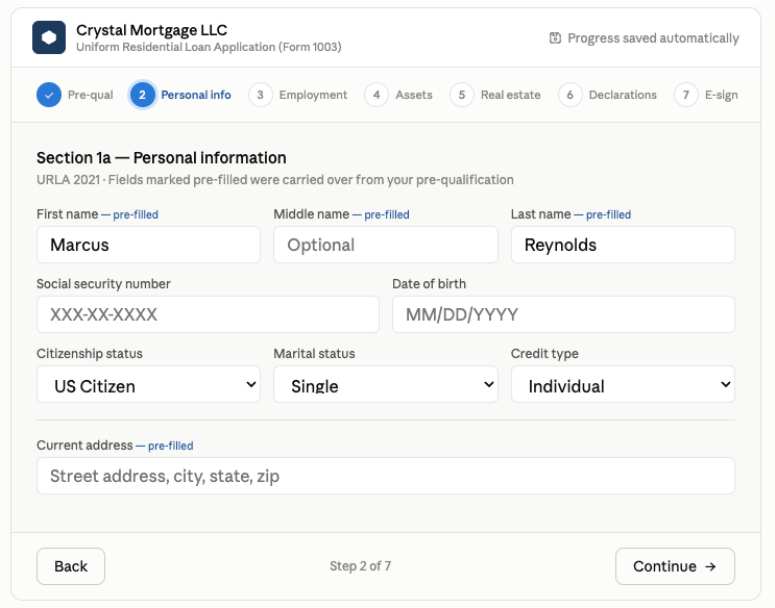
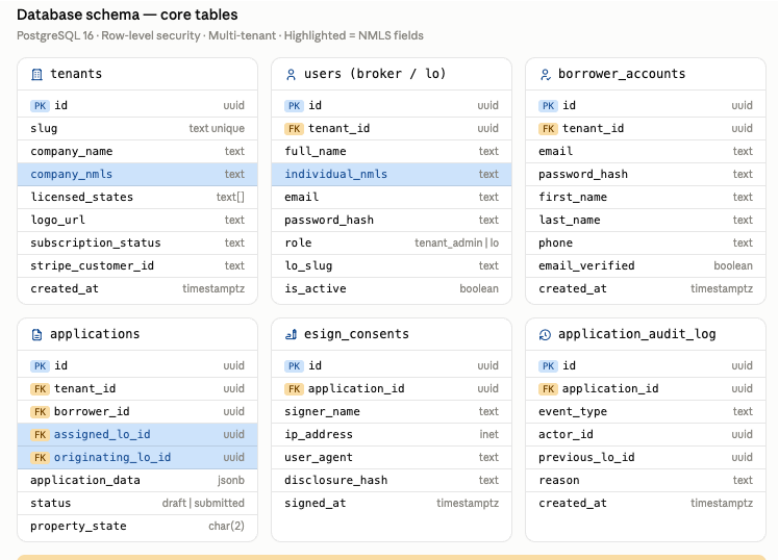
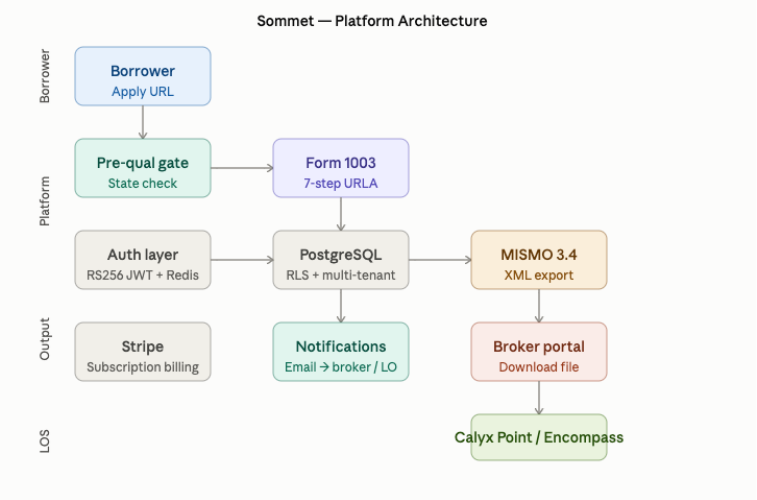
AI-assisted development changed how I approached implementation. One of the biggest lessons was that documentation is critical when building with AI. If a bug is fixed but the documentation isn't updated, the next AI-assisted implementation can work from outdated assumptions and introduce new problems.
When AI is part of the development team, documentation is part of the product.
Turning Founder Vision into an Executable Product Roadmap
Fractional CPO · Product Strategy · Customer Discovery · MVP Definition · Roadmap Prioritization · Delivery · Go-to-Market Alignment
A founder had an early-stage product and needed senior product leadership to bring structure to the vision, clarify what should be built, and determine how the business could move from concept toward a scalable product.
- Who is the product actually for?
- What core problem are we solving?
- What belongs in the MVP vs. post-launch phases?
- How do we quantify and prove product value?
- What milestones must the business hit before scaling?
- Redefined Product Focus: Clarified the ICP and brought strategic discipline to the roadmap.
- Structured the MVP: Defined the precise scope needed for early validation, separating core launch mechanics from secondary capabilities.
- Defined the USP: Refined messaging to articulate clear customer outcomes rather than abstract technical capabilities.
- Quantified Customer Value: Built a framework to calculate measurable ROI for end users, directly strengthening the commercial sales pitch.
- Established Product Discipline: Introduced rigorous requirements, validation protocols, documentation standards, and development workflows.
- Connected Product to Business Strategy: Aligned product delivery with unit economics, pricing models, go-to-market channels, and investment readiness milestones.
Why will the market care, and what value is created?
What metrics do we need to prove before allocating capital to scale?
That is the value I bring as a Fractional CPO: aligning product vision, technical architecture, and business strategy into a single operational roadmap.
Replacing a Failing Data Dependency Without Disrupting Four Other Product Teams
Product Strategy · Technical Product Leadership · Enterprise Data · Cross-Functional Alignment · Risk Management
E*TRADE's Income Estimator allowed customers to view income information associated with their portfolios, particularly around earnings activity. The product depended on a shared data feed. A problem with the underlying data was producing inaccurate information for some ticker symbols.
Technology had a daily remediation process intended to correct the data. But it wasn't fixing the underlying problem. The cycle became: Incorrect data → manual remediation → temporary fix → new daily feed → problem returns.
The immediate issue was data accuracy. The real problem was the technical debt created by repeatedly treating the symptom instead of the source.
The problematic data feed was shared across four other product teams—and their products were working. I couldn't simply say "this feed is causing problems, let's replace it." The other teams had no reason to voluntarily take on migration risk.
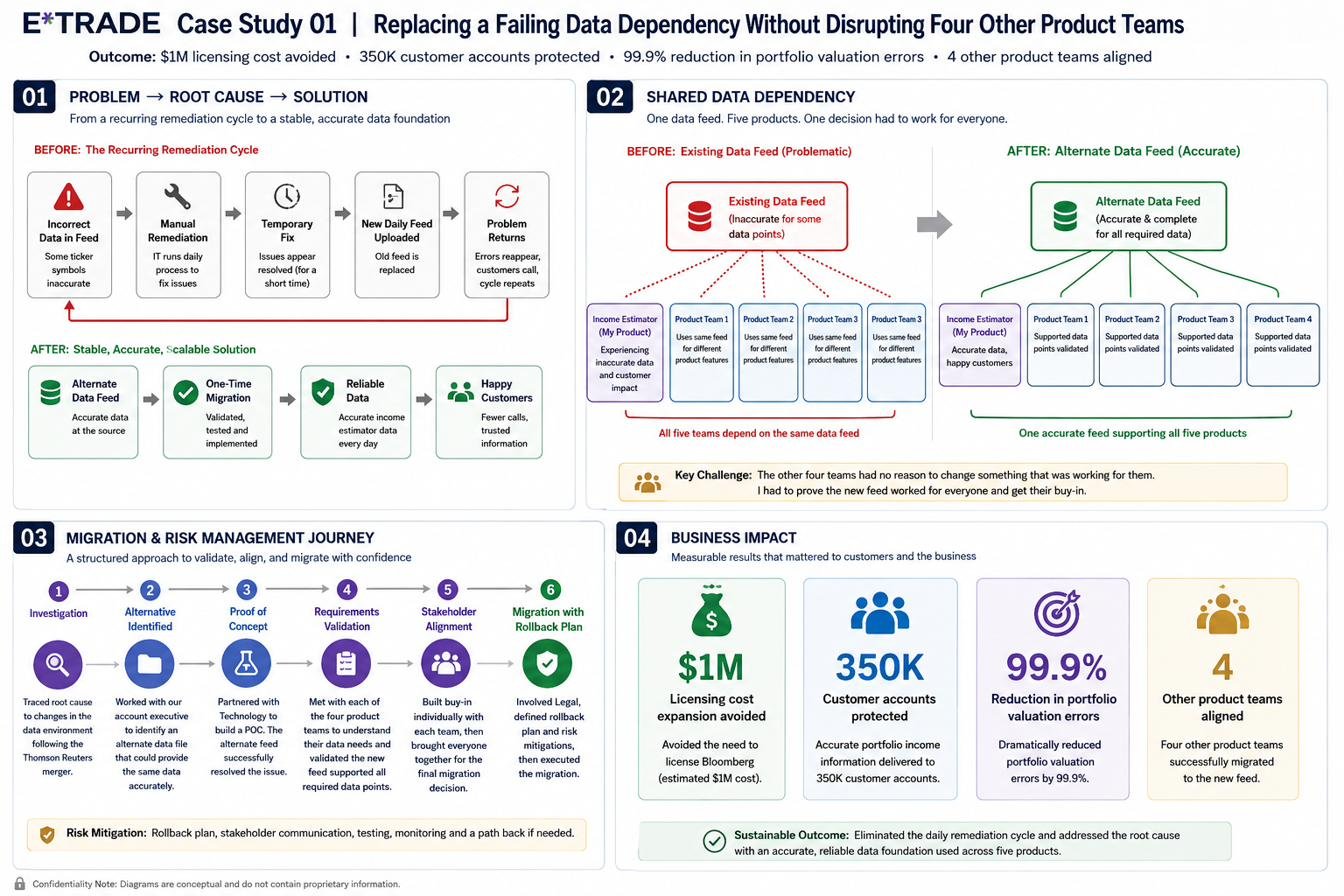
I traced the recurring data problems back to changes in the underlying data environment following the Thomson Reuters merger. Instead of continuing to patch the existing feed, I worked with the account executive to identify an alternative data file that could provide the required information accurately.
There was another obvious alternative: Bloomberg. But Bloomberg would have required approximately $1 million in licensing costs. I needed a solution that fixed the problem without creating a significantly larger cost problem.
I worked with Technology to build a proof of concept using the alternative feed. Because four other teams depended on the existing feed, I needed to validate that the alternative also supported their required data points. I went to each team individually.
Bringing Interactive Equity Modeling to E*TRADE
Customer Insight · Regulatory Strategy · Cross-Functional Execution · Vendor Management · Measurable Business Impact
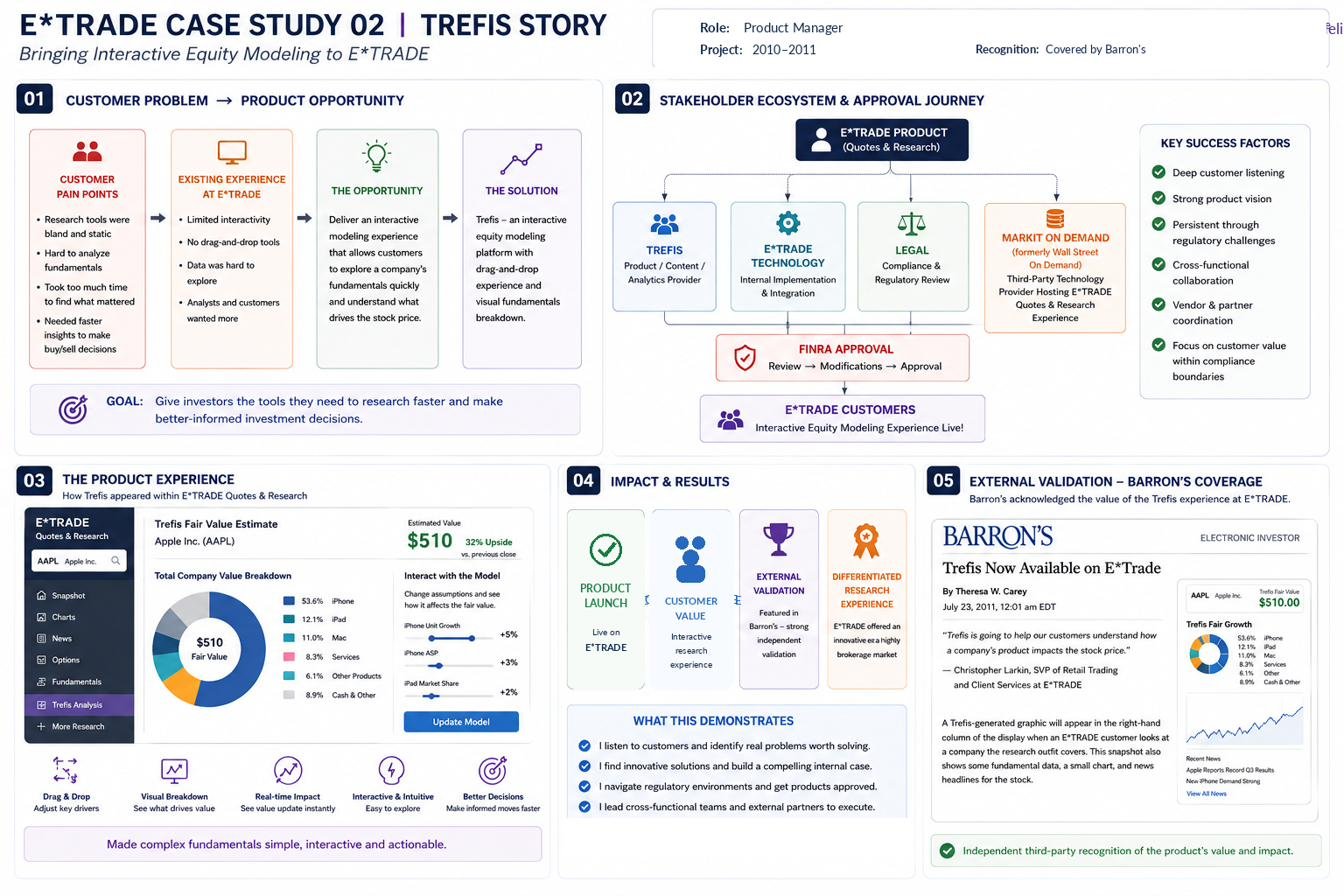
At E*TRADE, I owned product strategy for Quotes & Research at a time when online brokerage research experiences were relatively static and conservative. Customers wanted more interactive tools to research faster, understand investment opportunities, and make informed buy/sell decisions.
FINRA requirements made teams cautious about introducing new research and analytical experiences. The opportunity was clear: give customers a more interactive way to explore equity fundamentals without compromising regulatory requirements.
I discovered Trefis, an interactive equity modeling platform that allowed users to explore company fundamentals through a visual, drag-and-drop experience. The challenge was turning that opportunity into a product that could actually operate within E*TRADE's regulated environment.